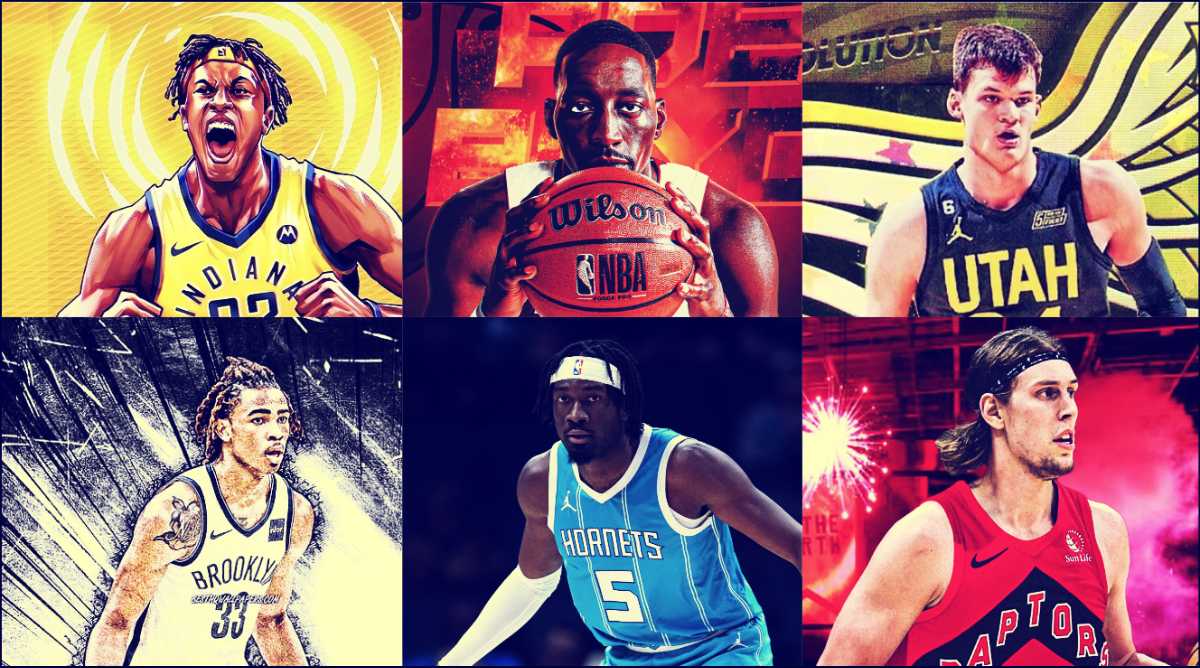
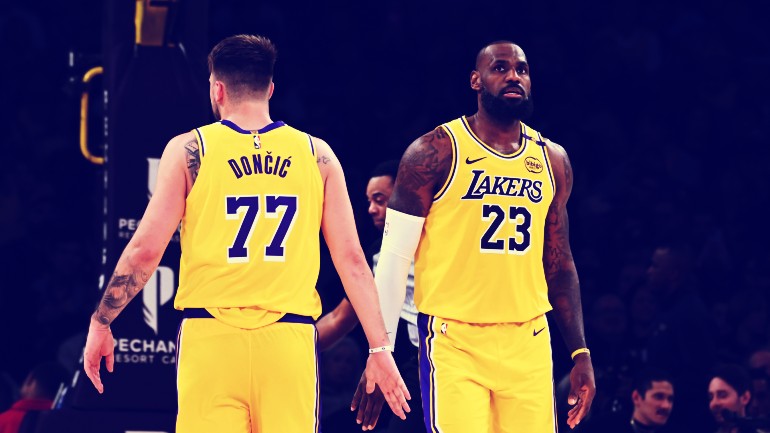
-
![Profile picture of LakerTom]()
LakerTom wrote a new post
#Lakers appear willing to offer Luka Doncic any contract structure he wants on his extension. Here are the different options:https://t.co/OUUVNeWlHP— Lakers Nation (@LakersNation) May 2, 2025
-
![Profile picture of LakerTom]()
LakerTom wrote a new post
-
![Profile picture of LakerTom]()
LakerTom wrote a new post
(@mcten) Doncic is expected to play for Slovenia.“He will spend the summer playing for the Slovenian men’s national basketball team at EuroBasket, sources said. He’ll be accompanied by members of his “body team” — Slovenian national team strength coach Anže Maček and… pic.twitter.com/E9ruhOhtwY— 🎗NBA•Fan🎗 (@Klutch_23) May 3, 2025
-
![Profile picture of LakerTom]()
LakerTom wrote a new post
![]() Read More
Read MoreThe Lakers’ surprise first round exit should ratchet up the pressure on Rob Pelinka to fix the broken roster that doomed L.A. in the playoffs and put together a legitimate championship caliber center rotation this summer.
By rescinding the Mark Williams trade, the Lakers made a clear decision to prioritize the future over the present, forcing the current team to live with a centerless roster while stockpiling tradable assets to use in the offseason. That means Rob Pelinka needs not only to trade for a championship caliber starting center this summer but also acquire a trustworthy backup center who, at minimum, can protect the rim and rebound when the starter rests.
While the Lakers top priority this offseason is fixing their center rotation, they also need to upgrade their wing defense and always like to have draft capital available in case another superstar suddenly comes on the market.
Their current draft capital includes their 2031 first round pick and 1–4 of their 2027 first round pick plus 2026, 2028, 2030, and 2032 pick swaps. There’s also a chance LeBron might take a pay cut to open up the NT MLE.The bad news is the Lakers have more holes to fill than assets to fill them but the good news is it looks like there will be no shortage of quality starting and backup centers who could be acquired for the right price.
Right now, the Lakers will probably have to trade for their new starting center but could use part of the possible NT MLE to sign a quality backup center, who needs to be good enough to make the Lakers’ rotation.So what constitutes a championship caliber center rotation for the Lakers, why should their trade strategy be best player and not best deal, and could Walker Kessler and Kelly Olynyk be their best potential center rotation?
WHAT IS A ‘CHAMPIONSHIP CALIBER’ CENTER ROTATION?

…
Pelinka already said the Lakers’ top priorities for starting center are ability to protect the rim and be a vertical lob threat but the center rotation as a whole should also include the ability to space the floor and defend in space.
The Lakers not only need a starting center but also a trustworthy backup who together can provide elite rim protection and mobile switchability on defense and vertical lob threat and 3-point floor spacing on offense.
Since there is no center out there who can fill all four of those roles, the Lakers need to build a rotation with a starting and backup center who together have the needed size and offensive and defensive skillsets.In retrospect, it’s obvious Rob Pelinka and the Lakers’ front office never viewed finding a championship caliber starting center as a critical roster need because they always had superstar Anthony Davis to play the five.
Trading Anthony Davis and watching Jaxson Hayes get played off the court in the playoffs have truly left the Lakers centerless at a point in time where the rest of the league seems to be returning to an age where size rules.There is no question the Lakers’ greatest roster need this summer is a championship caliber starting center who both can protect the rim and be a lethal vertical lob threat for new superstar point guard Luka Doncic.
What the Lakers need to do is replace what they lost on defense and offense when they traded Anthony Davis, which probably means adding at least two players with the size and skills to play the center position.A championship caliber center rotation needs an elite young two-way starting center with upside to anchor the defense and give the offense a vertical lob threat and an experienced veteran center to back him up.
WHY LAKERS NEED ‘BEST PLAYER’ MORE THAN ‘BEST DEAL’
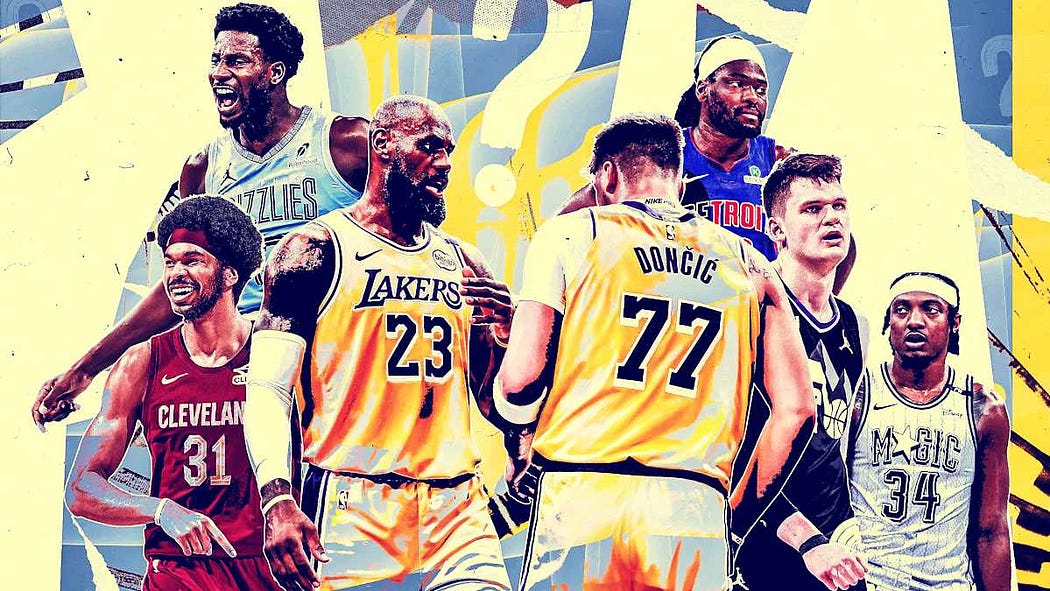
…
The good news is Pelinka knows the team needs to dramatically upgrade its center rotation both in ability and size. The bad news is Rob as usual will be looking to make the ‘best deal’ rather than acquire the ‘best two centers.’
There’s a time in the life of every organization when they’re facing a critical decision point they absolutely must get right, even if it ends up costing them a more than they hoped to pay. Now is that time for the Lakers.
After failing for four years straight to give their head coach a viable center rotation, Pelinka needs to identify the best targets as Laker starting and backup centers and pay whatever is needed to acquire the right players.Frankly, for the Lakers to be a legitimate championship caliber team, the need a championship caliber starting center. The Lakers’ starting center should be the third or fourth best player on the team. He’s that important.
Strategically, the Lakers simply must replace Anthony Davis with a center rotation that includes a championship caliber two-way starting center who can anchor the defense and be a lethal vertical lob threat for the offense.Fortunately, there are multiple elite starting center options for the Lakers to pursue, including the Pacers’ Myles Turner, Heat’s Bam Adebayo, Grizzlies’ Jaren Jackson, Jr., Nets’ Nic Claxton, and Jazz’ Walker Kessler.
There are also some excellent backup center option that could become available, including Kelly Olynyk, Steven Adams, Deandre Ayton, Nikola Vucevic, Isaiah Stewart, Jonas Valanciunas, and Robert Williams III.The Lakers need to identify the best starting and backup centers to complement and fit with Luka Doncic’s style of play and timeline and the team’s future cap situation and pay whatever they have to land them.
COULD KESSLER & OLYNYK BE BEST CENTER ROTATION?
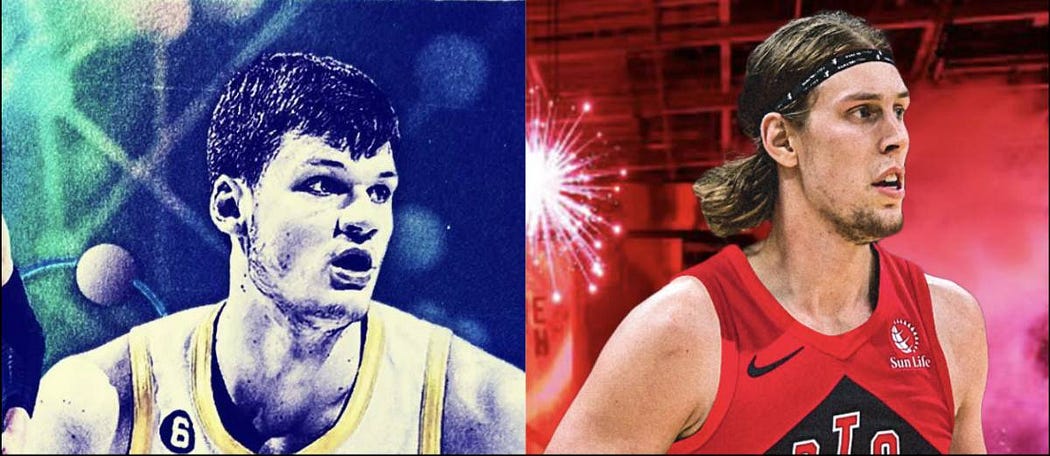
…
Two targets who would fill all the Lakers center needs both on offense and defense would Jazz’ Walker Kessler, an elite rim protector and rebounder, and Pelicans’ center Kelly Olynyk, an elite 3-point shooter and playmaker.
Walker Kessler and Kelly Olynyk would give the Lakers an elite, affordable two-man center rotation that perfectly complements Luka Doncic’s skills as a player and fits his timeline and championship window as a superstar.
The 2-man center rotation of Kessler and Olynyk would cover all four major center skillsets, including rim protection and guarding on the perimeter on defense and stretching the floor and being a vertical lob threat on offense.Kessler and Olynyk are also both on affordable contracts. Kessler is on the last year of his rookie contract and earns $4.9 million per year while Olynyk is in the last year of a 2-year deal and will make $13.4 million next season.
Compare those salaries to the $19.9, $23.4, $25.4, or $37.1 million per year the Lakers would be paying if they traded for Myles Turner, Jaren Jackson, Nic Claxton, or Bam Adebayo. Lakers get both Kessler and Olynyk for less.The combination of Walker Kessler’s rim protection, size and physicality, rookie contract and salary, and double-double points and rebounds make him the obvious ‘best player’ option as the Lakers’ new starting center.
The challenge will be getting Danny Ainge to trade Walker Kessler to the Lakers for a package that includes Dalton Knecht, unprotected 2031 first round pick, 2027 first round pick if 1–4, and 2028 first round pick swap.The 23-year old Kessler and 34-year old Olynyk, even if overpaid, would give the Lakers a deep and diverse championship caliber center rotation with great size and a lethal repertoire of offensive and defensive skills.
![Profile Photo]() liked this
4 Comments
liked this
4 Comments-
![Profile picture of LakerTom]()
-
![Profile picture of LakerTom]()
Lakers’ 1st Round Exit Should Force Pelinka To Upgrade Center Rotation WHAT IS A ‘CHAMPIONSHIP CALIBER’ CENTER ROTATION?Pelinka already said the Lakers’ top priorities for starting center are ability to protect the rim and be a vertical lob threat but the center rotation as a… pic.twitter.com/RY50Q6ZgFi— LakerTom (@LakerTom) May 4, 2025
-
![Profile picture of LakerTom]()
Lakers’ 1st Round Exit Should Force Pelinka To Upgrade Center Rotation WHY LAKERS NEED ‘BEST PLAYER’ MORE THAN ‘BEST DEAL’The good news is Pelinka knows the team needs to dramatically upgrade its center rotation both in ability and size. The bad news is Rob as usual will be… pic.twitter.com/ltgPW837RV— LakerTom (@LakerTom) May 4, 2025
-
![Profile picture of LakerTom]()
Lakers’ 1st Round Exit Should Force Pelinka To Upgrade Center Rotation COULD KESSLER & OLYNYK BE BEST CENTER ROTATION?Two targets who would fill all the Lakers center needs both on offense and defense would Jazz’ Walker Kessler, an elite rim protector and rebounder, and… pic.twitter.com/EM7jqKimHw— LakerTom (@LakerTom) May 4, 2025
-
-
![Profile picture of LakerTom]()
LakerTom wrote a new post
Lakers need to overhaul roster around Luka Dončić and LeBron James: 5 trade targets for L.A. https://t.co/bxoDilStfq via @@YahooSports— LakerTom (@LakerTom) May 3, 2025
![Profile Photo]() liked this
1 Comment
liked this
1 Comment-
![Profile picture of LakerTom]()
FROM THE ABOVE ARTICLE:
With all that in mind, and safely assuming that LeBron doesn’t want to hang it up, here are five trade targets to maximize the Luka-LeBron pairing:
1. Jarrett Allen, Cleveland Cavaliers
Jarrett Allen
C – CLE – #31
2024 – 2025 season
13.5 Pts, 9.7 Reb, 1.9 Ast, 0.9 Blk, 28:00 Min
The proposalLakers receive:
-Jarrett AllenCavs receive:
-Austin Reaves
-Dalton Knecht
-Unprotected 2031 first-rounder
-Pick swaps in 2026, 2028, 2030, 2032Once Cleveland inked Evan Mobley to a max extension last July, the writing was on the wall for the Core Four. Mobley’s contract explodes from $11.2 million in 2024-25 to $38.7 million in 2025-26, the first of a massive five-year pact, pushing the Cavs’ payroll deeper into the 2025-26 tax than all but two teams (Boston and Phoenix). For a small market like Cleveland, something’s got to give and, unfortunately, Allen may be the odd man out.
For the Lakers, the appeal is obvious. Allen, a one-time All-Star squarely in his prime (he turned 27 last week), would immediately step in as an ideal low-usage lob threat and defensive anchor. Plus, he has four fully guaranteed years left on his contract, starting at $20 million in 2025-26.
For the Cavs, Mobley’s Defensive Player of the Year ascension makes an Allen trade easier to swallow, especially if it brings in Reaves, a dynamic wing who can boost the team’s playmaking and foul-drawing on the perimeter. The Cavs would shave money off their hefty tax bill and still flex a formidable starting five of Darius Garland, Donovan Mitchell, Reaves, De’Andre Hunter and Mobley. An early exit in the playoffs would make an Allen deal more plausible, but no less painful.
2. Jaren Jackson Jr., Memphis Grizzlies
Jaren Jackson Jr.
C – MEM – #13
2024 – 2025 season
22.2 Pts, 5.6 Reb, 2 Ast, 1.5 Blk, 29:49 Min-The proposal
Lakers receive:
-Jaren Jackson Jr.
-Brandon ClarkeGrizzlies receive:
-Austin Reaves
-Rui Hachimura
-Dalton Knecht
-Unprotected 2031 first-rounder
-Pick swaps in 2026, 2028, 2030, 2032Will the Grizzlies fully smash the reset button after a disastrous finish to the season that included GM Zach Kleiman firing Taylor Jenkins right before the postseason and the team getting swept in the first round? We’ll see what happens this offseason with Ja Morant and Jackson.
The latter could have signed an extension before the season but decided against it, opting for the possibility he could make All-NBA this season and become eligible for a supermax extension bump. He has an expiring deal at a reasonable $25 million for 2025-26 after which the 25-year-old can become a free agent. Rather than risk letting the former Defensive Player of the Year walk for nothing, the Grizzlies could bring Reaves “home” to Memphis, just 100 miles away from the Newark, Arkansas, farm on which he was raised.
This season, Reaves joined Fred VanVleet as the only two undrafted players in NBA history to average 20 points and five assists on a winning team. Like Allen above, the Lakers would have to put all their chips in the middle. With Jackson’s uncertain future and Reaves’ local ties, this is certainly a situation to monitor.
3. Walker Kessler, Utah Jazz
Walker Kessler
C – UTA – #24
IR
2024 – 2025 season
11.1 Pts, 12.2 Reb, 1.7 Ast, 2.4 Blk, 30:00 Min
The proposalLakers receive:
-Walker KesslerJazz receive:
-Dalton Knecht
-Unprotected 2032 first-rounder
-Pick swaps in 2026, 2028, 2030, 2031This is the Mark Williams offer but with three more pick swaps and the first-round pick being one year later than the one Pelinka was willing to send to Charlotte. I’m not even sure Utah bites unless Reaves is part of the package, especially considering the Jazz may feel a certain way after unknowingly greasing the cap wheels for the Dončić trade in the first place. Kessler is set to earn less than $5 million next season, giving him one of the most team-friendly contracts in the league. Granted, he’s due for an extension this summer, so his discount has an expiration date on the horizon.
For the Jazz to trade the 23-year-old now, without seeing how he fits next to their incoming top-five pick, they’d be justified to ask for a king’s ransom.
Yes, it’s hard to reconcile Kessler’s elite block rates with Utah owning two of the worst defensive ratings in NBA history with him as the defensive anchor. That said, I’d be willing to bet on Kessler in a winning environment and not whatever Utah has been trying to do the past two seasons. A larger deal involving Jordan Clarkson and Collin Sexton’s expiring contracts can be explored with Reaves, but I don’t see the Lakers throwing him into a deal unless it’s for a bankable star. Kessler isn’t that, but he’s also an upgrade over Mark Williams.
4. Wendell Carter Jr., Orlando Magic
Wendell Carter Jr.
C – ORL – #34
2024 – 2025 season
9.1 Pts, 7.2 Reb, 2 Ast, 0.6 Blk, 25:51 Min
The proposalLakers receive:
-Wendell Carter Jr.Magic receive:
-Dalton Knecht
-Shake Milton
-Unprotected 2031 first-rounder
-Pick swaps in 2028 and 2030The Lakers and Magic seem like ideal trade partners. The defensively rich Magic desperately need an offensive injection (hello, Knecht!) and have the luxury of two springy centers who deserve a full-time starting role: Wendell Carter Jr. and Goga Bitadze.
Both would represent a significant upgrade over Jaxson Hayes, who struggled to gain the confidence of Redick this season. I much prefer Carter Jr.’s physicality compared to the Duke product that the Lakers almost acquired at the deadline, Mark Williams.
Playing without a true point guard for most of his career, Carter Jr. has some untapped Daniel Gafford lob potential. Last season, Carter Jr. flushed 19 alley-oop dunks with an average vertical of 27.6 inches, clearing Allen (27.3), Jackson (26.5) and Kessler (21.6) on this list. Put Carter Jr. next to LeBron and Luka and I think he’d thrive. An added bonus, he’s under contract for the next four seasons at a very moveable $17.4 million average annual salary.
5. Isaiah Stewart, Detroit Pistons
Isaiah Stewart
C – DET – #28
IR
2024 – 2025 season
6 Pts, 5.5 Reb, 1.7 Ast, 1.4 Blk, 19:55 MinThe proposal
Lakers receive:
-Stewart
-Lindy Waters IIIPistons receive:
-Dalton Knecht
-Gabe Vincent
-Shake Milton
-Two pick swaps in 2026 and 2028Beef Stew and LeBron James may have some, well, beef dating back to the 2021 tussle in which both were suspended, but if James wants an elite rim protector, it’ll be harder to find one better than Detroit’s 23-year-old center.
Stewart took a backseat to rising star Jalen Duren in 2024-25, but with a near 7-foot-5 wingspan, Stewart remains a monster in the paint. This past season, Stewart led all players in defensive field-goal percentage at the rim, allowing just 46% shooting by the basket while nearby, according to NBA.com player-tracking data (min. over 200 shots defended).
Stewart may not be a star like the targets above, but he’s certainly a star in his role, owning the boards and ranking among the league leaders in block rate. Over the next three seasons, Stewart is set to make $15 million (team option in 2027-28), which would allow the Lakers some cap flexibility to build around their starry core.
As for the Pistons, they acquire much-needed backcourt depth (Dennis Schröder, Tim Hardaway Jr. and Malik Beasley are all free agents) and one of the most promising young shooters in Knecht to flank Cade Cunningham. I could see the Pistons demanding a first-round pick if they were to part with Stewart, but Knecht’s upside as a sharpshooter could be enough.
-
-
![Profile picture of LakerTom]()
LakerTom wrote a new post
BASKETBALL GODS MAY HAVE DONE LAKERS FAVOR WITH 1ST ROUND EXITThe basketball gods may have been looking out for the Lakers as their 1st round exit may have avoided further embarrassment. Imagine what the Rockets two-big lineup with Sengun and Adams would have done to the small… https://t.co/LrtvAekr0r pic.twitter.com/3M3rijbgJV— LakerTom (@LakerTom) May 3, 2025
-
![Profile picture of LakerTom]()
LakerTom wrote a new post
-
![Profile picture of LakerTom]()
LakerTom wrote a new post
LAKERS JUST HAD SEASON FOR THE AGESIt's been a long time since Lakers fans ended a season without a championship but with smiles on their faces but this year is certainly one for the ages.As tough as the season ended, this season was one of those special seasons where… https://t.co/1imjVB96PD pic.twitter.com/Nx4TkcUBxH— LakerTom (@LakerTom) May 2, 2025
-
![Profile picture of LakerTom]()
LakerTom wrote a new post
Lakers coach JJ Redick: Team must ‘get into championship shape’ next season https://t.co/Kro5hd1QaN— LakerTom (@LakerTom) May 2, 2025
![Profile Photo]() liked this
1 Comment
liked this
1 Comment-
![Profile picture of LakerTom]()
FROM ABOVE ARTICLE:
Hours after his team’s season ended unceremoniously in five games in the first round to the Minnesota Timberwolves, Los Angeles Lakers coach JJ Redick looked ahead to next season and challenged his group’s conditioning.
“I’ll start with the offseason and the work that’s required in an offseason to be in championship shape,” Redick said Thursday in a news conference. “And we have a ways to go as a roster. And certainly, there are individuals that were in phenomenal shape. There’s certainly other ones that could have been in better shape. That’s where my mind goes immediately, is we have to get in championship shape.”
The Lakers sputtered in the fourth quarter of all five games in their 4-1 series loss to the Timberwolves. Minnesota outscored Los Angeles 127-85 in the collective fourth quarters, a decisive advantage that swung several games in the series.
“Maybe this is hard sometimes for a coach or a player to admit this: We lost to a better team,” Redick said. “That’s just the reality. We did.”
The other key factor in the Timberwolves’ favor was their considerable size advantage. The Lakers progressively went smaller throughout the series, eventually benching starting center Jaxson Hayes by Game 5 as he struggled to stay out of foul trouble and rebound. Rudy Gobert obliterated the Lakers in Game 5 with career highs in playoff points (27) and rebounds (24).
Lakers general manager Rob Pelinka noted the obvious: The Lakers need to add a starting-level center this offseason, whether in free agency or by trade.
“One of our primary goals is going to be to add size in our frontcourt at the center position,” Pelinka said.
Pelinka added that the Lakers want a “vertical threat, lob threat and someone that could protect the interior defensively.” He noted that there are stretch-5s who can also protect the rim. Luka Dončić excelled in Dallas alongside Dereck Lively II and Daniel Gafford, making that archetype the most logical addition.
The Lakers tried to add that type of big ahead of the deadline by trading for Charlotte Hornets center Mark Williams, but they rescinded the deal after the 7-footer failed his physical with the Lakers.
“The trade deadline and the moments up to it don’t allow you the requisite time to explore every single unturned stone to add a big to our roster,” Pelinka said. “We just didn’t have the time after the Luka trade. But now we do.”
Pelinka also said the team could use more defensive help on the perimeter.
“I think in terms of just solidifying our defensive core on the wings and just making sure that we have players that can defend the wing position,” Pelinka said. “That’s an essential need. We see it playing out in the playoffs, and anytime you can upgrade your defensive core on the perimeter, I think that’s going to help.”
Arguably the biggest domino of the Lakers’ offseason will be 40-year-old superstar LeBron James, who has a $52.6 million player option for the 2025-26 season, when he would play in his NBA-record 23rd season.
Pelinka knows the organization will have to continue to improve the roster to keep James happy.
“I think LeBron’s going to have high expectations for the roster,” Pelinka said. “And we’re going to do everything we can to meet those.”
Entering next season, the Lakers’ goal is to reshape the roster around Redick’s coaching sensibilities and the strengths of their three best players in Dončić, James and Austin Reaves.
“The level of confidence in Austin Reaves, LeBron James and Luka Dončić is at an all-time high still,” Pelinka said. “I think those three guys have incredible promise playing together. And we will collectively do a better job to make sure they’re surrounded with the right pieces to have ultimate success.”
-
-
![Profile picture of LakerTom]()
LakerTom wrote a new post
![Profile Photo]() liked this
1 Comment
liked this
1 Comment-
![Profile picture of LakerTom]()
Extended thoughts from LeBron on JJ Redick:"I think whatever happens, JJ will continue to grow. Thought he had a hell of a rookie campaign … it’s a hell of a lot harder being a rookie head coach coaching the Lakers. A whole other ballgame. I thought he handled it extremely…— Mike Trudell (@LakersReporter) May 1, 2025
-
-
![Profile picture of LakerTom]()
LakerTom wrote a new post
![]() Read More
Read MoreThe Los Angeles Lakers showed their hand all the way back on Feb. 8. That is when they elected not to complete their second major trade of deadline season, the Mark Williams acquisition, because of concerns raised during his physical. If their goal was strictly to compete for the 2025 NBA championship, they would have made the trade with Charlotte anyway. As flawed as Williams might be, not having him is probably the single biggest reason the Lakers just lost their first-round series to the Minnesota Timberwolves.
Forget about how badly they needed a center, specifically. JJ Redick was so low on his bench that he became the first head coach in tracking era history to ever use the same five-man lineup across a full half of a playoff game in Game 4. He trusted five players so he used five players. He just needed one more good, usable player.
The Lakers knew how thin this roster was in February. That’s why they rushed to grab Williams in the first place. But his medical concerns forced them to make a choice. The deadline had passed. They had no other way of adding an impact player. They could take Williams, go for it now and worry about the future, or they could punt 2025, hold the assets and try again later. They had to choose their priority: present or future.
That choice was obscured by their early success with Luka Dončić. For a minute there, it really looked like the Lakers could have made a deep playoff run without sacrificing the chips they might need for the offseason. The Timberwolves reminded us why that was never really plausible. The regular season is about strength and the playoffs are about weaknesses. Remaking your entire roster on the fly in February makes it almost impossible to cover up those weaknesses by the time April and May roll around. Maybe the Lakers could have done it if they’d prioritized the present. But they didn’t. They expressly chose the future.
So now, that future is here. The Lakers are not going to win the 2025 championship, but they have the foundation of a team that might be able to do it in 2026. They have one of the best players in the NBA today in Dončić and they have one of the best players in NBA history in LeBron James. That’s the hard part right there. They have the stars. They might even have a third one in Austin Reaves. What they lack is the sort of versatility and depth that won Minnesota this series. That is what they’re going to spend the next few months trying to find. Here’s how they’re going to try to do it.
What do they have and what do they need?
Right now, the Lakers owe a bit more than $121.2 million in guaranteed money to nine players for next season. Those players are Luka Dončić, Rui Hachimura, Austin Reaves, Gabe Vincent, Jarred Vanderbilt, Maxi Kleber, Dalton Knecht, Shake Milton and Bronny James. A 10th player, Jordan Goodwin, has a non-guaranteed minimum salary for next season and is almost certain to be back at roughly $2.3 million. With no other contracts added, that leaves the Lakers roughly $30 million below the projected salary cap and $65 million below the luxury tax. More importantly, it would give them around $73 million in space below the projected $195.9 million first apron and then around $85 million below the projected $207.8 million second apron. Of course, we still have two very important players to cover.
The first was their first trade addition of the season, Dorian Finney-Smith. He has a $15.4 million player option. The Lakers would love him back at that number. He would presumably like to be back, but with a bit more long-term security. Depending on what the Lakers are trying to accomplish from a cap perspective, that means they could either given him an extension off of that $15.4 million number or, if they need a bit more wiggle room this season, potentially ask him to opt out and leave a bit on the table for this season for more money in future years. Either way, expect a long-term resolution to be reached.
The second is far more significant: LeBron James. Like Finney-Smith, James has a player option. His is more expensive at around $52.6 million. If he wants to opt in at that number, the Lakers wouldn’t object. If he wants to opt out and re-sign for his slightly higher max, again, the Lakers would be fine with it. But if they have their way, James would leave a bit of money on the table to facilitate roster improvements.
Remember, he was willing to do so last year. The exact amount was unknown, but the idea was to open enough room to either use the non-taxpayer mid-level exception or acquire someone through a sign-and-trade. That would have meant sacrificing between $15 million and $20 million. The Lakers used that flexibility to chase Klay Thompson, didn’t get him, so James signed for nearly the max. Now, let’s say he’s willing to do so again. What kind of contract would he be signing?
Well, we can’t say for certain yet because we don’t know what the Lakers will do on the trade market, but here’s a rough estimate based on the Lakers neither adding nor subtracting major money through trades. Imagine Finney-Smith opts in. That would take them to around $138.9 million. Next, we’ll bake in $14.1 million, the projected non-taxpayer mid-level exception, for a significant free-agent signing, and another $10 million to both fill out the roster in July and have a bit of wiggle room in-season for 10-day contracts or trades. All of that would take the Lakers to around $158.9 million in salaries, leaving James roughly $37 million in salary below the first apron. That’s a $15 million cut from his player option, well within our intended range.
If this is broadly acceptable to James, the Lakers will likely set up their offseason moves in a similar way to how the Philadelphia 76ers did in 2023. James Harden told the 76ers to make whatever moves they planned to make and then give him “whatever is left over.” This way, the Lakers wouldn’t be constrained as they navigated their offseason business. They could make whatever trades they want to make, sign their free agents, and then hand LeBron whatever money they have left beneath whichever apron they’re locked below. If they want a non-taxpayer mid-level free agent, it will be the first apron.
Barring a few unlikely scenarios we will address below, we can safely assume that Dončić, James and Reaves are untouchable. Finney-Smith has negotiating leverage through his option, so he would only get traded if he wanted to. Assume he’s staying. Hachimura would be the hardest remaining Laker to part with, but given his roughly $18 million salary, he could be used to match money in certain trades. More likely, the Lakers would try to use the expiring contracts of Kleber ($11 million) and Vincent ($11.5 million) as salary filler in whatever trades they make. If they can find someone to take Vanderbilt ($11.6 million) instead of Vincent, they’d prefer to, but Vanderbilt has three years left on his contract, so he’ll be harder to move. Knecht ($4 million) is another possible trade piece as well.
As far as draft assets go, the Lakers can trade their unprotected 2031 first-round pick outright. They can also offer swap rights on their first-round picks in 2026, 2028, 2030 and 2032. Lastly, the 2027 first-round pick they owe the Jazz is top-four protected and does not extend into future seasons. Therefore, they can offer their 2027 pick in trades with the provision that the acquiring team only gets it if it lands in the top four.
So we’ve covered what the Lakers have and how much money they owe. What are they actually trying to get? In immediate basketball terms, they have two major needs. The first is a center, any center. This should be a good offseason to look for a center on the trade market, which works out nicely, because it’s a pretty limited market in free agency with one exception. The second need is a defensive-minded guard. Finney-Smith can defend big forwards, but as the Lakers learned with Anthony Edwards, they are not equipped to contain explosive guards. In another stroke of luck, this is a good free-agent class for such defenders. As they’ve learned with Vanderbilt, this defender needs to be good enough on offense to stay on the floor in the playoffs.
Lastly, we need to acknowledge the obvious: these are the Lakers. They’re going to sniff around any available stars. James is here for now, and Reaves has a chance to be an All-Star, but they don’t have an obvious long-term sidekick for Dončić yet. Getting one, either now or later, will be in the back of their mind.
So, with all of that in mind, let’s talk targets.
Which centers could they trade for?
The first call the Lakers make should go to the Milwaukee Bucks for Giannis Antetokounmpo. Offer everything but Dončić and James. Reaves, picks, other players, whatever. They’ll say no, but hey, you have to make the call. These are the Lakers, after all, and as they learned with Dončić, they tend to be pretty lucky in these endeavors.
The next call is probably a no as well, but it’s slightly more serious: Jaren Jackson Jr. His situation is somewhat unique. If he makes All-NBA, he likely re-signs in Memphis for the super max. If he doesn’t make All-NBA, the Grizzlies need cap space to renegotiate and extend him. They’ve cleared some, but we don’t yet know if it will be enough. The Jackson situation is fluid. If he doesn’t extend, it might mean he’s just waiting until next summer, when he can just do so with full Bird Rights. It might also mean he’s angling to leave.
This is where tampering definitely absolutely certainly does not happen (but really kind of does). If Jackson wants to be a Laker, they’ll know. As the Lakers have the capacity to create max cap space in 2026, they can threaten to sign him outright if he wants to come. This was part of how the Lakers got Anthony Davis in 2019. Again, don’t count out on it, but these are scenarios the team will game out. If they think they can pressure the Grizzlies into making a bad Jackson trade, they’ll try to do it.
Ok, now that we’ve gotten the stars out of the way, let’s talk about the more practical targets. The priorities here are rim-protection and lob-finishing. The ideal Laker center does both. Price matters on a few levels. We covered the aprons above, but we should also note that part of the appeal Williams had was that he was on a rookie contract. That not only mean a low salary for now, but it also meant a low cap hold as a 2026 free agent. In a perfect world, the Lakers would probably prefer to keep their cap clean for 2026 free agency and beyond. We’ll note that where applicable, but for now focus primarily on basketball fit. There are eight teams that make some measure of sense as Laker trade partners for a big man. Here they are in no particular order:
- Dallas: Will Nico Harrison ever trade with the Lakers again? Probably not, but Dončić has an established history with both Daniel Gafford and Dereck Lively and would probably love reuniting with either of them. Gafford is a 2026 free agent. Lively is eligible for a rookie extension in 2026. If there are any fears about a new contract for either, or either hints at a desire to leave, well, it doesn’t hurt to ask.
- Brooklyn: The obvious suspect here. They just had a disappointing tank season in large part because they didn’t move enough veterans. If they want to rectify that, moving Nic Claxton makes sense. If they want to go all-in and chase Giannis Antetokounmpo, well, trading Claxton still makes sense because he’s a non-shooting center. His contract conveniently descends in value each year, making him easy to fit on a balance sheet. He defends on the perimeter almost as well as he protects the rim, a nice bonus for a Laker team that has gotten comfortable switching this season. However, he’s not nearly bulky enough to defend bigger centers like Nikola Jokić, nor is he a perfect offensive fit. He has good verticality with his leaping ability and wingspan, but he doesn’t have great hands, a necessity when catching high passes from Dončić. He’s a good fit, just a shade worse than the two Mavericks.
- Indiana: There were Myles Turner rumblings at the trade deadline, and he’s about to hit free agency. The Lakers have been interested in the past, but lack the sort of win-now pieces the Pacers would probably covet. There’s also the matter of a contract to consider. How much does Turner want on his next deal? Offensively, he would be a godsend. Not only can he play in pick-and-roll, but he makes 3s as well. The questions, surprisingly, are on defense, where Turner’s rim-protection numbers have slipped of late. Indiana’s defense as a whole has gotten better this season, but he’s not the “can cover for everyone” big man he was a few years ago.
- Utah: Walker Kessler is another frequent Laker target. His rim-protection is elite, and while he’s not exactly suited to a switch-heavy scheme, he’s not a total perimeter slouch either. He can move. His offense, outside of rebounding, is a work in progress. He’s dipped his toe into 3-point shooting with underwhelming results, and he’s a straight up bad free-throw shooter. He’s almost impossible to judge as a pick-and-roll player, though, because the Jazz have never consistently had even average guard play during his career. If the Jazz want to keep him, they’ll extend him. If they draft a big man in June? Maybe he’s gettable, and, like Williams, he’s still on a rookie deal with a low 2026 cap hold.
- Charlotte: There’s bad blood here, of course, but we know the Lakers like Williams as a player and we know the Hornets are willing to trade him. It would be a bit dirty, but don’t be surprised if the Lakers re-engage the Hornets at a lower price point this summer. They might’ve done that after the failed physical if they’d been allowed, but the deadline had passed.
- New York: It would be hard to rely on Mitchell Robinson as a full-time starter given his injury history, but his salary is reasonably low, he checks the boxes the Lakers need checked on the court and the Lakers were interested in him coming out of the draft. He could be part of a time share at center if the Lakers find someone else.
- Portland: Robert Williams III is similar to Robinson in that he’s nice to have on the team but too injury-prone to trust as the starter. Deandre Ayton is more interesting. The Lakers love buying low on talented players who haven’t produced recently. Ayton has squandered several years refusing to mix it up in the paint and settling for mid-range jumpers. He slowly started inching back in the right direction this year, and his 2021 self was exactly what the Lakers want. That he’s going into a contract year should hopefully motivate him, and the Lakers would be betting on a James-led culture to help get the most out of him. He’s the priciest player we’ve covered so far in terms of salary, but likely not all that expensive from an asset perspective. If the Lakers would be comfortable aggregating Vanderbilt, Vincent and Kleber for him, they could probably preserve their draft assets and their 2026 cap space. Either way, Portland likely won’t bring both Ayton and Williams into the season on their roster. Donovan Clingan will likely be their starter. The other, their backup.
- Minnesota: Yea, we’re getting weird. Are we sure Rudy Gobert is on the Timberwolves next season? His cap number is about to drop thanks to a pre-season extension, but the Timberwolves have to figure out new contracts for Julius Randle, Naz Reid and Nickeil Alexander-Walker. Someone in that foursome likely isn’t coming back; the Timberwolves just aren’t going to want to consistently stay in the second apron. They’ve already traded Karl-Anthony Towns for financial purposes. Moving Gobert now would just serve to reorient the team around those younger players. If Dončić could stomach sharing a team with him, he’d be a great basketball fit. He remains a stellar defender, and while his offense has nosedived this season, he’s traditionally been good at catching lobs, setting screens and offensive rebounding. That’s all the Lakers need their center to do.
The free-agent class really isn’t suited to the Lakers beyond Turner. Brook Lopez is declining, but even at his peak, wouldn’t work with Dončić’s need for a lob-catcher. If he wants to take a steep discount to sign as a backup and live near Disneyland, let him, but odds are, he doesn’t fit. The Timberwolves won’t cooperate in getting Naz Reid to Los Angeles, and that would have to happen through a sign-and-trade. Either way, he’s not good enough to anchor this defense. It’s not even a great year for backup centers. As much as it might bother Laker fans, there might not be a better backup option than just re-signing Jaxson Hayes.
The likelihood, though, is that the starter comes somewhere off of the list above. The idea here should be to trade for a center and then look at wings in free agency. There are, fortunately, several.
Which wings could they sign?
The name of the game here will be defense. There are six free-agent wings here who make some sense using all or part of the mid-level exception, with one key standout:
- Nickeil Alexander-Walker: If he wants to be a Laker for the full four-year non-taxpayer mid-level exception, he should be a Laker. He is the ideal wing for this role, a high-end guard defender that has shot in the low 40s on catch-and-shoot 3s two seasons in a row now. The question here is money. Minnesota has full Bird Rights and can outbid the Lakers, and their willingness to do so likely depends on what becomes of Randle and Reid. So could any cap space team, and without knowing what Brooklyn’s plans are yet, the Nets loom as a threat here. Make the offer. If he doesn’t take it, move on.
- Bruce Brown: He doesn’t have the leverage he did a few years ago, when every contender was racing to throw their mid-level at him before he got more than that from Indiana. It’s been a rough, injury-filled two years for Brown, but he’s only 28. He’s not a great shooter, but he makes corner 3s. He can handle the ball more than he gets credit for. The success of his next contract, though, hinges on his defense. If he can get back to where he was in Brooklyn and Denver, he’s worth a nice chunk of that mid-level exception on a short-term deal.
- Gary Payton II: We know he can defend, and the added bonus here is that taking him away from Golden State cripples the Warriors defensively. He’s the weapon they throw on opposing stars. Of course, the last time he left, it didn’t go well. His preference will likely be to remain with Golden State. If the Warriors can fit him into whatever their cap structure is, they would prefer to, but if they decide to get more ambitious and potentially sign-and-trade Jonathan Kuminga, that might be out of their hands. Payton’s offensive game is similar to Brown’s: low-volume corner 3s, sneaky value as a screener in pick-and-roll, potentially less valuable outside of the situation that put him on our radar in the first place. He’s worked on offense with Stephen Curry. Would he bring similar issues offensively that Vanderbilt has on a team without the greatest shooter of all time? Or could the Lakers figure out how to make it work with three high-end ball-handlers?
- Davion Mitchell: He’s a restricted free agent, so Miami can match any offer, but it’s unclear how high they’ll be willing to go. Mitchell finally started making 3s this season, and if he keeps that up, the defense he’s always played makes him a remarkably valuable player. He’s also a pretty useful passer, not enough to start at point guard on a normal team, but certainly one equipped to take advantage of the opportunities playing with other stars create.
- Matisse Thybulle: He has a player option that he might exercise. He just missed most of the season due to injury. But he’s improved from an outright terrible shooter to at least an occasionally passable one in Portland, and he’s obviously never played with the sort of shot-creation he’d have in Los Angeles. He’s at his best in a strong defensive infrastructure where he can gamble for turnovers and blocks. That’s not this Laker team, but he’d immediately become the best perimeter defender on the team.
- Dennis Schröder: A third go-round probably doesn’t make sense here. Someone will pay him for his offense, and if the Lakers wanted to keep him, they wouldn’t have chosen Vincent over him. Still, he’s a player the Lakers know well and he’s still quite good against smaller guards.
Those are the obvious names, but the Lakers tend to go off-script in free agency. Don’t be too surprised if you hear them linked to offense-centric players in the mid-level discussion with the idea that they can address defense later through the trade market if their trade resources haven’t been exhausted by the center pursuit.
Gary Trent and Ty Jerome stand out as offensive players the Lakers might like who do not have full Bird Rights with their current teams this summer, so they might be harder for those teams to retain. The Lakers are quietly a bit thinner on shooting than most realize. Dončić, James and Reaves are all creators more than shooters. Knecht is a still a bit of a mystery, and Vincent is pretty inconsistent. Defense should be the priority, but ultimately the Lakers have historically favored talent acquisition over fit concerns. This is going to be an offense-centric team that just tries to get by on defense.
Could this finally be the year James and Chris Paul play together to both complete the banana boat prophecy and exorcise the ghosts of David Stern’s vetoed trade? It’s possible, though unlikely. San Antonio is likely happy with the year he just had and is willing to pay to keep him. He’d be a minimum target for the Lakers. But hey, his family is still based in Los Angeles, he and James are incredibly close, the Lakers would probably have minutes available for him and he could ring-chase. He’s by far the most notable minimum-salary target here, but he probably isn’t a feasible one. Still, the fact that we covered him serves as a useful segue. The Lakers are a star-driven organization. So let’s talk about some stars.
How does future free agency factor in here?
We circle back, once again, to the Williams trade. Part of the idea of trading for him was that his 2026 cap hold would have been fairly low at around $18.8 million. Reaves is in the same boat. His bargain contract means that he will only have a cap hold of around $20.9 million in the summer of 2026. The basic plan would have been to keep those three plus anyone cheap, but clear the decks otherwise to sign a max-salary free agent. They could potentially still do something like that, depending on the cap figures associated with any players they add this summer, but it gets harder without having the center position solved in advance.
If this is ultimately the plan, Jaren Jackson is the obvious target. We covered him from a trade perspective above, but it’s also possible that he just plays out next season on an expiring deal. If he does, they’d probably like to be in a position to pursue him as an All-Star defensive anchor to pair with Dončić and Reaves. Their moves this summer will be telling in that regard. If they only add short-term deals, it’s probably because they think they have some chance at adding a star in free agency down the line, when James is likely either retired or old enough not to worry about what he’s making.
This approach doesn’t need to be exclusive to 2026 and Jackson. It definitely gets harder afterward because Reaves will no longer be on a below-market deal, but it’s also plausible that the Lakers only add players whose contracts expire before 2027. Take the following list with a grain (or several) of salt. We’re talking so far in advance here that the entire league landscape could be different. Most of these players are going to sign extensions or get traded before the summer of 2027. But, as it stands now, the following players could become free agents in 2027: Nikola Jokić, Giannis Antetokounmpo, Shai Gilgeous-Alexander, Donovan Mitchell, Karl-Anthony Towns, Anthony Davis, Stephen Curry, Jimmy Butler and Kawhi Leonard.
I will state, emphatically, that the Lakers should not expect all of those players to be available. Heck, technically, Dončić is on that list. We don’t talk about him that way because we assume he’ll extend, as many players on that list will. Others will age out of stardom. I bring up the list to make a somewhat simple point: at any given time in the modern NBA, there are always a handful of stars near the end of their contracts. Some of those stars will be happy where they are. Others will develop wandering eyes. The Lakers, barring another meaningful jump from Reaves, probably don’t have the assets to trade for someone like that under normal circumstances.
But if they set themselves up to pay for such players in free agency? That tilts the equation. It opens the door for lopsided trades. It opens the door for getting players like that without sacrificing assets. Star team-ups, most often, boil down to star relationships. If Dončić and some other famous player decide they want to be teammates, they’ll find a way to be teammates. Usually, when two players like that partner up and one of them is in Los Angeles, the other joins them in Los Angeles. Think of James and Davis as the template here.
To loop this all the way back to the beginning, this is why the Lakers were so comfortable prioritizing future over present. Dončić gives them a younger version of what James did in 2019: a recruiter. They know that at some point reasonably soon, someone is going to want to join his team. In the meantime, they are going to do their best to balance their priorities. They don’t want to lose track of what they can do with James now because of what they might do with someone else in the future. But if you don’t think the Lakers are keenly aware of the friendship between Dončić and Jokić and how that might come up if the Nuggets don’t get their house in order over the next few years, you just haven’t studied NBA history closely enough. This is how it works for the Lakers.
Someone, somewhere, is going to be unhappy. When they are, Dončić and the Lakers will want to be ready to fix that. Keep that in mind with every move the Lakers make this summer. They have a very real chance to win the championship in 2026. They are not going to ignore that chance. But they will be balancing it against what they hope is a decade of contention. That’s a hard tightrope to walk, but if any team is lucky enough to make it across to the other side, it’s probably the Lakers.
![Profile Photo]() liked this
2 Comments
liked this
2 Comments-
![Profile picture of LakerTom]()
LAKERS CHOSE FUTURE OVER PRESENTWhat a terrific article by Sam Quinn. Any Lakers fan who’s disappointed in the Lakers first round exit needs to take a deep breath and relax. The Lakers made the right decision to trade AD for Luka and to prioritize the future rather than the… https://t.co/nMvoTbzGXU pic.twitter.com/D6FVDqPawW— LakerTom (@LakerTom) May 1, 2025
-
![Profile picture of LakerTom]()
Marks’ offseason guide for the Lakers:- ‘Bron opt in/opt out deadline is June 29th- tradable players: Reaves, Hachimura, Finney-Smith, Vincent, Knecht- Luka extension eligible on Aug 2nd … Marks thinks he will go “3 for $165 million” in order to get to 10 years of service…— The Lakers Review (@TheLakersReview) May 1, 2025
-
![Profile picture of LakerTom]()
LakerTom wrote a new post
THE MINNESOTA TIMBERWOLVES HAVE ELIMINATED THE LOS ANGELES LAKERS 4-1. (🎥 via @RyanMSwanson) pic.twitter.com/CwwIA6uEhz— Shahbaz Khan (@ShahbazMKhan) May 1, 2025
3 Comments-
![Profile picture of LakerTom]()
ESPN refers to them as their “NBA Panel Of Experts”. Yeah that’s hysterical. They voted 11-1 on the Lakers beating the Wolves pic.twitter.com/OQtKYytDeG— Andy Roth (@arhooptalk) May 1, 2025
-
![Profile picture of LakerTom]()
THE MINNESOTA TIMBERWOLVES 4-1 THE LOS ANGELES LAKERS- ANTHONY EDWARDS IS THE BEAR – JULIUS RANDLE IS INCREDIBLE- NAZ REID DEMON- WE HAVE JADEN MCDANIELS- RUDY GOBERT GAME 5 MASTERCLASS – DONTES INFERNO – #WOLVESBACK pic.twitter.com/sFytFaUpwo— Wolves Lead (@TWolvesLead) May 1, 2025
-
![Profile picture of LakerTom]()
Led by Rudy Gobert and Julius Randle, the Wolves just… – beat the higher seed- quieted the loudmouth Laker fanbase- defeated last year’s Wolves-killer, Luka Doncic- sent LeBron to the offseasonGrown man stat line got it done! pic.twitter.com/kjoupIP7fE— Alex Conover 🏀📷 (@NorthstarAlex) May 1, 2025
-
-
![Profile picture of LakerTom]()
LakerTom wrote a new post
A change to the Lakers’ starting 5 pic.twitter.com/FT8NTNPOaZ— Trevor Lane (@Trevor_Lane) May 1, 2025
![Profile Photo]() liked this
liked this
-
![Profile picture of LakerTom]()
LakerTom wrote a new post
Here are the shirts fans will receive for Lakers-Wolves Game 5. pic.twitter.com/PknNWs0PEd— Edwin Garcia (@ECreates88) April 30, 2025
-
![Profile picture of LakerTom]()
LakerTom wrote a new post
BREAKING: Maxi Kleber is making his Lakers debut tonight pic.twitter.com/55qTLUUXFq— LakeShowYo (@LakeShowYo) May 1, 2025
mAX
- Load More Posts


LakerTomOffline
-
16.6K
Posts
-
18.2K
Comments
-
58.1K
Views